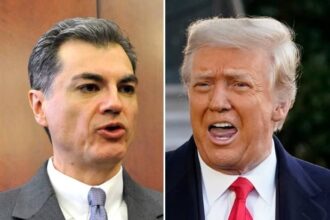
A Colorado judge ruled on Friday that former President Donald Trump was indeed involved in the insurrection during the January 6, 2021 attack on the U.S. Capitol.
Despite this acknowledgment, the judge rejected a move to bar Trump from Colorado’s primary ballot. Daily Kos reported on Saturday, November 18, 2023, that the decision hinged on uncertainties surrounding the application of a Civil War-era Constitutional amendment to presidential candidacy.
The lawsuit, brought by a left-leaning group representing Colorado voters across party lines, claimed that Trump’s actions violated a clause in the 14th Amendment, barring individuals from office if they engaged in insurrection or rebellion against the Constitution.
District Judge Sarah B. Wallace’s ruling marked the third within a week refusing attempts to keep Trump off the primary ballot using Section 3 of the 14th Amendment. The judge recognized Trump’s involvement in insurrection but grappled with applying Section 3 directly to a presidential candidate.
Section 3 doesn’t explicitly mention the presidency, creating ambiguity in interpretation, referring instead to elector of President and Vice President, among other offices.
Trump campaign spokesman Steven Cheung dismissed the ruling as another Democratic attempt to meddle with the electoral process, calling the lawsuits cynical and blatant political attempts.
The group behind the case, Citizens for Responsibility and Ethics in Washington (CREW), plans to appeal to the Colorado Supreme Court. Attorney Mario Nicolais, representing the voters, emphasized satisfaction with the court’s acknowledgment of Trump’s insurrection involvement.
Legal experts predict that the question may eventually reach the U.S. Supreme Court, as Section 3 gains attention following the Capitol attack.
Trump’s defense argued that his actions were protected by the First Amendment and that Section 3 wasn’t intended for presidential candidates. They insisted that political parties, not judges, should determine eligibility.
These recent cases have revived interest in Section 3, with legal historians noting its historical context and its resurgence post-January 6. Whether these legal challenges affect Trump’s candidacy or set Section 3 precedents remains uncertain, underscoring the ongoing legal aftermath of the Capitol attack on the electoral process.