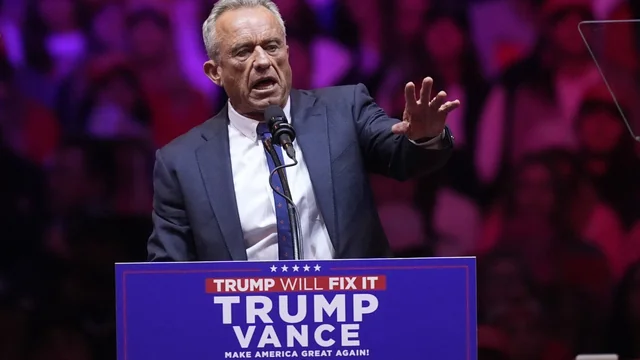
The Supreme Court has turned down an emergency appeal to take Robert F. Kennedy Jr. off the presidential ballot in two critical battleground states, Wisconsin and Michigan. This decision comes just days before the election, as early voting is already underway.
After dropping his independent candidacy and endorsing Republican Donald Trump, Kennedy argued that keeping his name on the ballot infringed upon his First Amendment rights. However, state officials in both Michigan and Wisconsin stated that removing his name now would be impossible given the current voting circumstances.
While the Supreme Court did not elaborate on its reasoning for rejecting the appeal, it is notable that Justice Neil Gorsuch dissented in the Michigan case. The inclusion of independent and third-party candidates on ballots in swing states is a significant factor in this closely contested presidential race.
Previously, the high court had dismissed Kennedy’s separate attempt to remain on the ballot in New York, a state where his candidacy was deemed unlikely to influence the outcome between Trump and Democratic candidate Kamala Harris. Kennedy has been working to withdraw his name from ballots in seven key swing states since endorsing Trump, and Wisconsin and Michigan are the final two where he is expected to appear.
In Michigan, Kennedy initially secured a win at the appeals court level; however, he ultimately missed the deadline to withdraw as the candidate of the Natural Law Party, which wanted him to remain on the ballot. In Wisconsin, courts ruled that qualified candidates who have filed nomination papers must stay on the ballot unless they pass away. Moreover, plans to cover Kennedy’s name with stickers were deemed unfeasible.