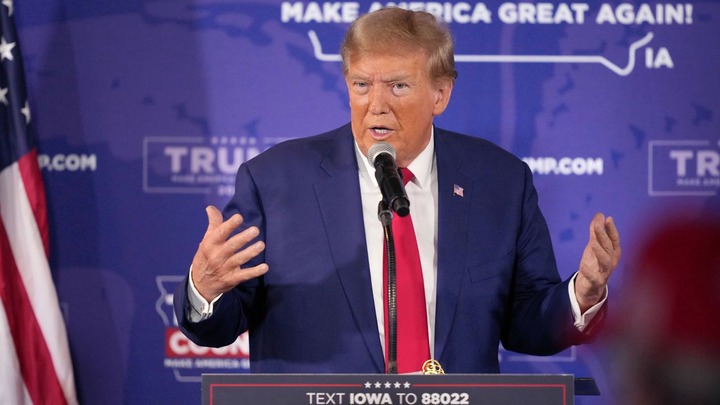
Former President Donald Trump’s recent proclamation during a rally in Tulsa, Oklahoma, has sparked significant controversy. Trump boldly declared, “I’m the best president for black people since Abraham Lincoln,” a statement that has prompted widespread debate among historians, political analysts, and the public alike.
In his address, Trump highlighted his administration’s purported support for African American communities, citing achievements such as the passage of criminal justice reform, historically low black unemployment rates before the COVID-19 pandemic, and increased funding for historically black colleges and universities (HBCUs).
The centerpiece of Trump’s claim rests on several key policy initiatives and economic statistics. The First Step Act, a bipartisan bill passed in 2018, aimed to rectify sentencing disparities and offer rehabilitation opportunities for formerly incarcerated individuals. Advocates argue that this legislation has notably benefited African American communities, which have historically borne the brunt of the criminal justice system’s inequities.
Moreover, under Trump’s tenure, the black unemployment rate reached historic lows, plummeting to 5.4% in August 2019. Supporters contend that this economic milestone underscores Trump’s commitment to fostering job growth and economic opportunities for black Americans.
Trump also signed legislation providing permanent funding for HBCUs, ensuring consistent financial support for these institutions.
However, Trump’s assertion has been met with skepticism and criticism. Historians and civil rights advocates point out that while his administration implemented policies ostensibly advantageous to black communities, the overall impact and intent behind these measures are subject to debate.

Critics highlight Trump’s controversial statements and actions, which many view as racially insensitive or discriminatory. His handling of the Black Lives Matter movement and the protests following George Floyd’s murder, including the deployment of federal troops to suppress demonstrations, has drawn particular condemnation.
Additionally, Trump’s equivocation during the Charlottesville protests and remarks about predominantly African American cities have been widely condemned.
Prominent civil rights leaders, such as Reverend Al Sharpton, have expressed dissent, emphasizing that genuine progress requires more than economic statistics; it necessitates a sincere commitment to justice and equality.
Comparisons to Abraham Lincoln, renowned for issuing the Emancipation Proclamation and guiding the nation through the Civil War, have been dismissed as hyperbolic. Lincoln’s legacy as an abolitionist and advocate for Union preservation sets a lofty standard that many argue Trump has not met.
Trump’s assertion has reignited discussions about the impact of his administration’s policies on minority communities, particularly as the 2024 election approaches. Whether viewed as a boastful claim or a point of pride, Trump’s statement underscores the intricate and often contentious nature of presidential legacies and their interpretations.